From data to decisions: making your business numbers work for you
Your business already produces the data it needs — it's just trapped in scattered tools and spreadsheets. The complete guide to turning what you already have into decisions you can act on.


Most owners think they need to collect more data to make better decisions. Usually the opposite is true. The data already exists — every booking, job, order and payment your business handles is data. It's just trapped in tools and spreadsheets that don't talk to each other, so no one can turn it into a clear answer. This guide is about fixing that: turning the data you already have into decisions you can act on, without launching a big "analytics project."
The short version
- You're not short of data — you're short of data that's connected, accurate and usable.
- Scattered tools mean simple questions take hours to answer, so people guess instead.
- The value comes from bringing the numbers together and surfacing the few that change a decision.
- A simple number you trust beats a beautiful dashboard you don't.
- When your operation runs on one connected system, the reporting largely falls out of it.
Why the real problem isn't missing data
The same information lives in your booking tool, your accounting software, three spreadsheets and someone's inbox. Because none of it is joined up, a basic question — which customers are slipping, which jobs run late, where the margin actually is — takes an afternoon of manual work. Someone exports from a few tools, reconciles it against a spreadsheet, and hopes the numbers agree. By the time there's an answer, it's stale.
So the question stops being asked. Decisions get made on gut feel, not because the data isn't there, but because getting to it is too much effort. The business flies partly blind — not for lack of information, but for lack of access to it. That's a fragmentation problem, not a reporting problem, and it's the thread running through every article in this guide.
What "from data to decision" actually means
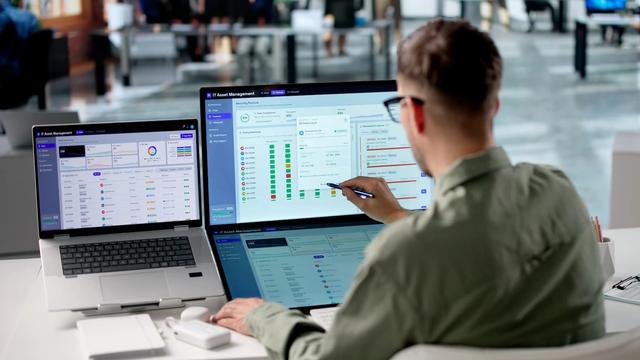
It's a short chain, and none of it is glamorous. Bring the numbers together in one place. Make sure they're accurate. Then surface the handful of things that actually change what you'd do. Everything else is noise. The goal isn't dashboards for their own sake — it's a few decisions made on numbers you trust.
That's worth saying plainly, because a lot of "data" advice points businesses at tooling they don't need. You don't need big data, machine learning or a wall of live charts. You need your own numbers, made trustworthy, aimed at the decisions you actually make each week.
Why trustworthy beats fancy
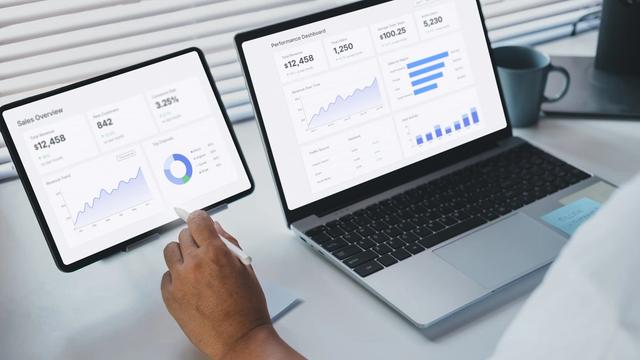
A simple number you believe beats a beautiful dashboard you don't. If the data underneath is patchy — because it's re-keyed by hand across systems that disagree — no visualisation fixes it. People quietly stop trusting the reports and go back to guessing. The unglamorous work of getting one accurate source of truth is what makes everything downstream useful.
This is why the order matters so much. Connect and clean the data first, then report on it. A reporting tool bolted onto fragmented data just visualises the confusion faster and more expensively.
What good looks like
For most Australian small and mid-sized businesses, useful reporting answers four questions:
- Where does the time and money go? — which parts of the operation cost the most.
- What's working? — so you deliberately do more of it.
- What's slipping? — customers, jobs or payments quietly falling through.
- What's coming? — enough of a forward view to plan staff, stock and cash.
Four questions, answered clearly and kept current, beat forty charts nobody reads.
How this usually gets fixed
You rarely need a separate data project. When your operation runs on one connected system built around how you actually work — instead of scattered tools that each hold a slice — the data is already together, accurate and current. The reports you need mostly produce themselves, because there's one source to read from. The insight was there all along; it just needed the plumbing. And because we integrate with the tools you already use, like Xero and your CRM, this doesn't mean ripping everything out and starting again.
Where to start
The first step isn't buying a reporting tool. It's understanding where your data actually lives today and where the copies disagree. Mapping how information moves through your business shows exactly why answers are hard — and what it would take to make them easy. That's the diagnosis, and the value is in what we find.
Read next
This guide is broken into ten focused articles. Start wherever your pain is sharpest:
- The data you're already sitting on — and how to turn it into decisions
- Why you can't get a straight answer from your own data
- What business reporting should actually tell you
- One source of truth: the foundation of trustworthy reporting
- The reports every operations owner should have
- Why a simple number you trust beats a fancy dashboard
- Retention and repeat business: the metrics hiding in your data
- How to spot what's slipping before it costs you
- Turning operational data into a forward view (planning and capacity)
- Do you need a data project, or just a connected system?
Tell us what you run, and we'll show you what's possible.