When to use AI agents in your business — and when not to
AI agents can quietly handle real work — but only in the right places. Here's a plain guide to where they earn their keep, where they don't, and how to add them without creating a new mess.

Use AI agents for the repetitive, rule-shaped work that has a clear right answer and clean data behind it — and keep humans on the judgement calls, the edge cases and anything where a mistake is costly. Agents are a tool, not a strategy. They earn their keep in specific spots, not everywhere. The businesses that get value from them are the ones that worked out where those spots are before they started, rather than sprinkling AI across the whole operation and hoping.
The short version
- An AI agent is software that can carry out a task on its own, not just answer a question.
- They're best at high-volume, rule-based work with clear inputs and a clear right answer.
- They're a poor fit for judgement, sensitive decisions, or anything resting on messy data.
- Agents inherit your data — if it's a mess, so are they. Sort the process first.
- Add them narrow, with a human checking the output until you trust it.
What an AI agent actually is
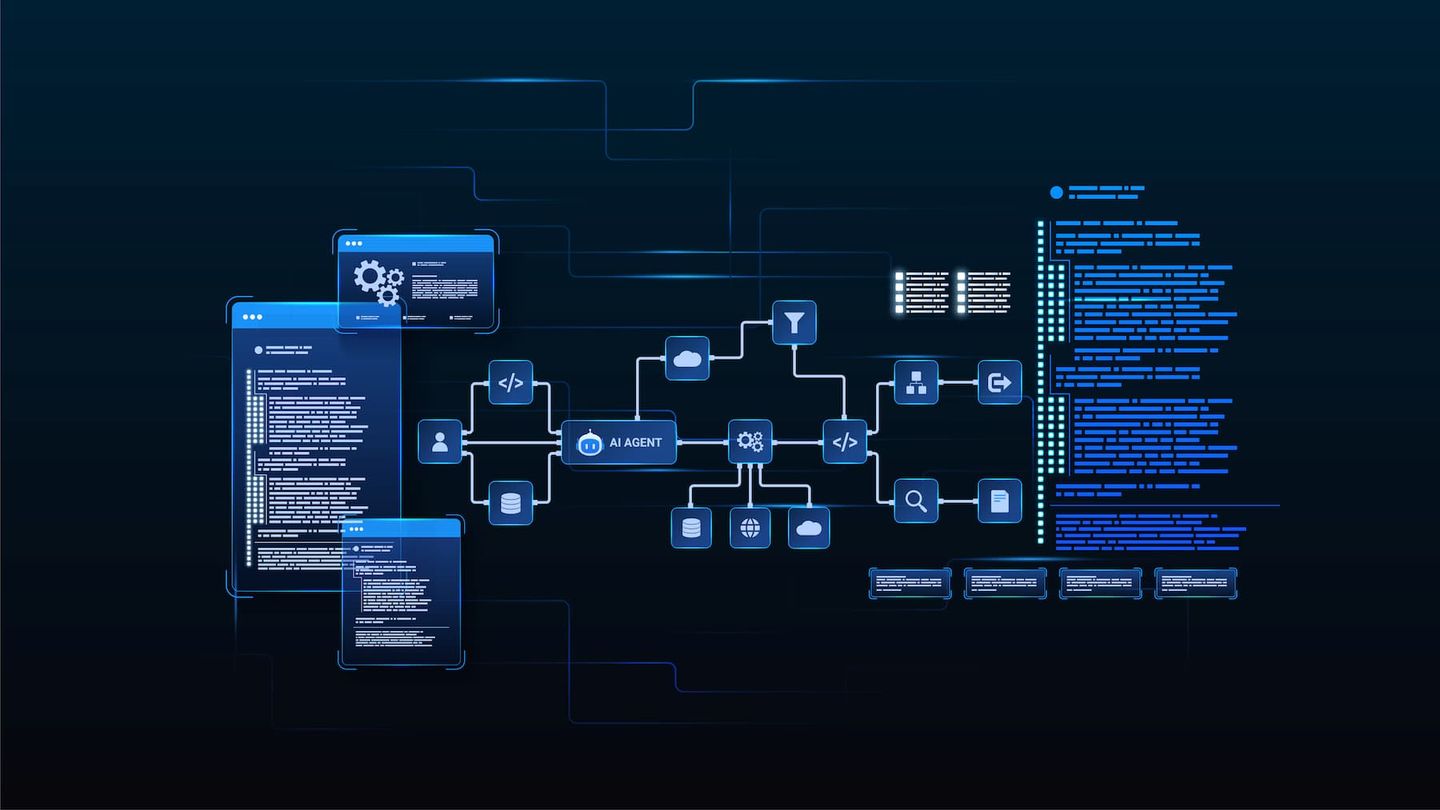
Put simply, an agent is software you hand a task to, rather than a question. A chatbot answers; an agent acts. It can take steps, use your tools and complete work on its own — sorting enquiries, drafting replies, moving information between systems, flagging what needs a human. That's genuinely useful. But an agent is only as good as the process and data it's plugged into, which is why "where" and "on what" matter far more than the technology itself.
Where do AI agents earn their keep?
The sweet spot is work that's high-volume and rule-shaped, where a person's time is largely wasted on repetition.
- High-volume, repetitive tasks — the same job, many times a day, where doing it by hand is a poor use of anyone's time.
- Rule-shaped decisions — where the "if this, then that" is clear and consistent.
- Triage and routing — sorting what comes in and sending it to the right place or person.
- First drafts — where a human reviews and finishes, so the agent saves time without owning the final outcome.
In each of these, the agent removes grind, and a person stays close enough to catch anything odd. That combination — machine speed, human oversight — is where the value tends to land.
Where should you keep humans?
- Judgement calls — anything that needs context, nuance or reading a situation.
- Sensitive or high-stakes decisions — where a wrong answer is expensive or hard to undo.
- Messy or incomplete data — an agent working from bad inputs produces confident, wrong results.
- The exceptions — the odd cases that don't fit the rules are exactly where people are needed.
The thread through all four is consequence. An agent doesn't know when it's out of its depth. It will make the call anyway, at speed, and won't raise its hand to say it wasn't sure. Where a mistake is cheap and rare, that's fine. Where it's expensive or hard to reverse, keep a person on the decision and let the agent handle the routine around it.
The mistake most people make
They bolt an agent onto a broken process and expect magic. Agents inherit your data and your workflow — if information is scattered and the process is a mess, the agent just automates the mess faster and with more confidence. This is the same trap that catches any automation, and it's covered in depth in why automation fails when the process underneath is broken.
The value comes from first understanding the workflow, deciding what to automate, what to streamline and what to leave with people, and then adding agents where they genuinely help. The technology is the last decision, not the first.
How do you add agents without creating a new problem?
Start narrow: one well-defined task, plugged into the tools you already use, with a human reviewing the output until you trust it. Prove it, then expand. And keep it maintained — agents drift as your tools and rules change, so they need looking after, not a set-and-forget launch. The point isn't to be cautious for its own sake; it's that a small, proven automation you trust is worth more than a sprawling one nobody's watching.
Data quality sits underneath all of this. An agent acting on a stale customer list emails the wrong people; one working from contradictory stock figures makes the wrong call. Before you hand an agent real work, it's worth understanding how AI agents inherit your data and getting one accurate source of truth in place.
Related reading
- Pillar: Business process automation: a practical guide
- Automation vs AI agents: what's the difference, and which do you need?
- What should stay human: the limits of automation
The honest first step
The question isn't "should we use AI?" — it's "where, exactly, would it help, and what has to be true first?" That comes out of looking at how your operation actually runs. Get the process right and the data connected, and the agents have somewhere solid to stand. Get it wrong, and no amount of clever software will save it.
Tell us what you run, and we'll show you what's possible.